Posted On: September 29, 2026 by admin
You finish a round, toss the clubs in the car, and notice that your back feels tighter than usual. Maybe your elbow starts to ache on the drive home. Or one bad strike sends a sharp pain through your wrist, and suddenly you wonder whether the next tee time is a good idea.
Pain after golf can be easy to dismiss because golf does not look rough on the body. The reality is different. Every shot asks your body to produce force, control rotation, and transfer that force from the ground to the club in a fraction of a second.
Around 57% of amateur golfers and 73.5% of professional golfers reported a musculoskeletal injury at some point in their golfing lives.
That does not mean every ache signals a serious problem. It does mean golfers should pay attention when pain repeats, changes their game, or starts to affect daily life.
Many golf injuries do not begin with one dramatic moment. They build as the body handles more stress than it can recover from.
You may add an extra range session after several quiet weeks. You may grip the club harder because your elbow already feels tender. A stiff hip may make your lower back do more work through the turn. Even firm practice mats can place extra stress on the hands and wrists when the club hits the surface before the ball.
The first clue often feels minor. A golfer may notice tightness after nine holes, soreness that lasts into the next day, or pain that appears only with one club.
The pattern matters more than a single uncomfortable shot. Pain deserves closer attention when it starts sooner each time you play, becomes sharper, or causes you to change your grip or motion.
The place that hurts gives you an important clue, but it does not always tell the whole story. Golf uses the body as one connected system, so your back, hips, shoulders, elbows, wrists, and knees all share the workload.
Lower Back Pain After Golf Often Reflects More Than Tight Muscles
Lower back pain after golf ranks among the most common complaints golfers report. Some people feel a dull ache after a round. Others notice a sharp catch during rotation or stiffness the next morning.
It can feel natural to blame tight back muscles, but the cause may sit elsewhere. Limited hip motion can force the lower back to rotate more. Poor trunk strength can reduce your ability to control force through the shot. A sudden increase in practice volume can irritate a back that handled shorter sessions without trouble.
That is why endless stretching does not solve every case.
A physical therapist can check how your hips, trunk, and upper back contribute to the golf swing and determine which area needs attention. If your back pain keeps returning, learn more about back pain treatment at Mossy Creek Rehab.
Golfer’s Elbow Can Build Slowly Until Your Grip Starts to Hurt
Golfer’s elbow usually causes pain along the inside of the elbow, near the point where several forearm tendons attach.
At first, you may only notice it after a long practice session. Later, the pain may appear when you grip a club, carry a bag, open a jar, or lift something with your palm up.
Golf can place a lot of force through this region, especially if you grip the club too tightly or strike the turf hard. A rapid increase in practice volume can also irritate the tendon.
Do not assume every elbow problem is golfer’s elbow. Pain on the outside of the elbow may involve a different tendon. Numbness or tingling into the ring finger or little finger can point toward nerve irritation.
Golf injury treatment works best when you identify the actual source instead of treating every elbow ache the same way.
Wrist Pain After Golf Deserves Attention After a Hard Strike
One heavy shot into the turf can make the wrist hurt immediately. Repeated contact with a firm range mat can also create trouble over time.
The exact location of wrist pain matters. Pain near the thumb side differs from pain closer to the little finger. Some golfers feel soreness across the back of the wrist, while others notice pain closer to the palm.
Mild irritation may improve after you reduce the shots that provoke it. A sharp pain after a hard strike deserves more caution, especially if you also notice swelling, loss of grip strength, or a painful click.
Do not try to hit your way through a wrist that hurts every time the club meets the ground.
Shoulder Pain After Golf Can Change How You Finish the Swing
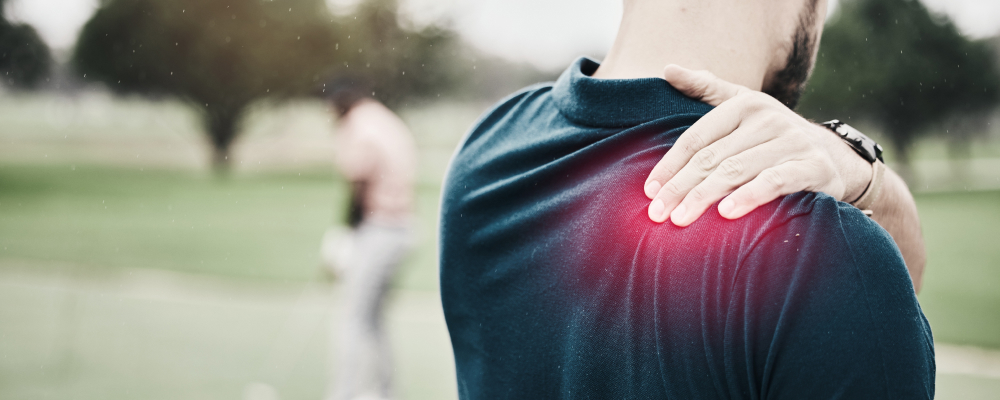
The shoulders play a major role in how the club moves through the backswing, impact, and finish. Pain can develop when the shoulder lacks enough motion or strength for the amount of golf you play.
You may notice discomfort when you reach across your body. Some golfers feel pain at the top of the backswing. Others notice weakness after the round or pain at night.
A shoulder problem can also make you compensate without realizing it. You may shorten the backswing or avoid a full finish because your body tries to protect the sore area.
If that starts to happen, an assessment can help you address the cause before the compensation becomes part of your normal motion.
Knee Pain After Golf Can Show Up on the Course or Later That Day
Golf places rotational stress through the knees, but the course itself also adds several miles of walking, hills, and uneven ground.
A golfer with knee pain may feel discomfort during weight shift or after the round. Existing arthritis can flare after more golf than usual. Other problems may involve the kneecap, meniscus, or surrounding muscles.
A knee that feels mildly sore after an unusually long day may settle with recovery. A knee that locks, gives way, swells significantly, or makes it hard to bear weight needs medical attention.
The answer is rarely to force the turn and hope the pain disappears.
Hip Pain After Golf Can Feel Different Depending on Where It Starts
Hip pain after golf does not feel the same for everyone.
Pain deep in the groin may feel like a pinch during rotation. Pain along the outer hip may feel tender after walking the course. Pain near the buttock may come from the hip, surrounding muscles, or even the lower back.
This distinction matters because the right treatment depends on the source.
Many golfers assume that every hip problem needs more stretching. That can backfire if a stretch reproduces a sharp pinch. A better plan starts with an assessment of hip motion, strength, and the way your lower body controls rotation.
Good golf injury treatment starts with one question. What makes the pain better or worse?
If full shots cause pain but normal daily movement feels comfortable, reduce the golf load first. Do not rush from complete rest straight back into an 18-hole round.
Return in steps. Start with the least demanding golf activity that feels comfortable. Try putting or short chips before partial swings. Add controlled full shots only after the earlier stage feels good during the session and afterward.
This approach gives your body a chance to adapt instead of forcing it to pass a full-course test on the first day back.
Physical therapy can also address the reason the area became overloaded. That may involve strength, joint motion, balance, or better control through the golf swing.
Golf injury prevention does not require a complicated routine. It does require more than a few rushed stretches next to the first tee.
Give your body time to prepare. Start with easy movement, then add gentle trunk and hip motion. Take a few slow practice swings before you add speed.
Your weekly habits matter even more.
If you normally hit 40 balls, jumping to 150 after a month away can create more stress than your body expects. The same problem can occur when the weather improves and you suddenly play several rounds in one week.
Strength also protects your game. Your legs and trunk help manage force, while your shoulders and forearms control the club. A stronger body usually tolerates golf better than one that only sees exercise during a weekend round.
For more ideas, read our guide to sports injury prevention.
Golfers often ask whether they should finish a round if something starts to hurt.
Mild soreness that stays stable may not require you to stop immediately. Sharp pain is different. So is pain that grows with every shot or forces you to change your motion.
Stop the round if you develop clear weakness, major swelling, loss of sensation, or instability. Back pain that travels into the leg with numbness or tingling also deserves medical attention. The American Orthopaedic Society for Sports Medicine offers similar guidance for golfers with back symptoms.
Your body may also give you a quieter warning. If you suddenly shorten your backswing, protect one side, or avoid certain clubs because of pain, the problem already affects your game.
That is a good time to find out why.
The goal of rehab should extend beyond making the painful area feel better for a few days.
At Mossy Creek Rehab, care can focus on the movements that matter to your life and your game. A physical therapist can assess how your body handles rotation and force, then build a plan that fits your current symptoms.
Your return to golf can progress at a pace your body can handle. Short shots may come first. Full swings can follow as strength and confidence return.
The goal is simple. You should feel prepared to play again, rather than wonder whether the next shot will bring the pain back.
Should I Keep Playing When Golfer’s Elbow Hurts?
If your grip or swing clearly reproduces inner elbow pain, reduce the activity that provokes it. Persistent pain, weakness, or nerve symptoms deserve an assessment before you return to normal volume.
How Long Should Pain After Golf Last?
There is no single normal timeline. Mild muscle soreness should gradually improve. Pain that lasts longer each time you play, appears earlier in the round, or affects everyday tasks deserves closer attention.
Can Golf Injury Treatment With Physical Therapy Help Me Play Again?
Yes. Physical therapy can help identify the limits that contribute to pain and rebuild your ability to tolerate golf. A good plan should restore function first, then prepare you for the specific demands of practice and full rounds.
Golf should give you a reason to look forward to your next tee time. If pain starts to shape how you play, how long you practice, or whether you want to pick up a club at all, it may be time to address the cause rather than keep working around it.


 865-262-9044