Posted On: November 3, 2026 by Robert Matijevich
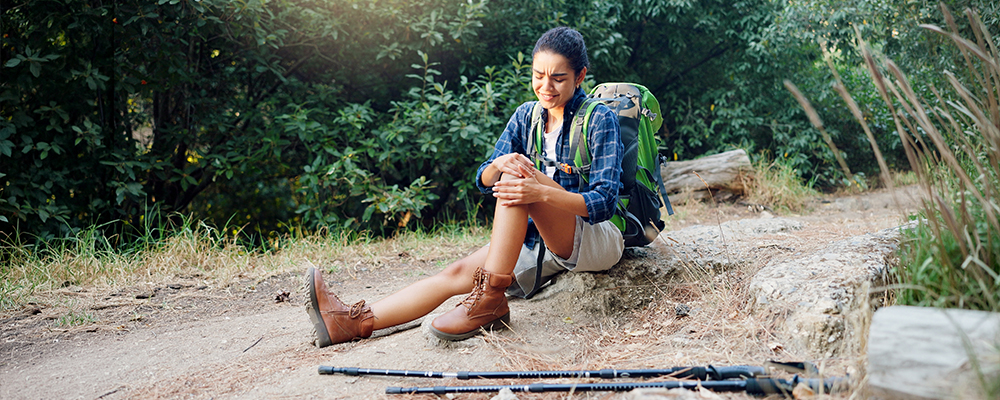
Crisp, invigorating air, vibrant autumn colors, and the absence of summer crowds… This makes autumn the perfect season for hiking. Yet, during this time many hikers discover their knees are not quite up to the challenge. Do your knees start to ache when descending a mountain ridge? Do you feel a persistent, dull pain in your joints after a long day on the trail? You are not alone! Knee pain is often the result of excessive strain. With the right approach to training, you can manage it. We will explore what happens to your knees, look at the latest scientific findings, and discuss how to prepare your body for the season before the autumn foliage reaches its peak brilliance.
Fall hiking combines several knee stressors at once. Leaf litter hides roots, rocks, and wet clay, so your knees constantly make small corrections to keep you upright. Cooler mornings leave muscles stiffer in the first mile. Shorter days tempt people to hurry the descent before dark. And after a summer of lighter activity, many hikers jump straight into long, steep outings, such as the climbs around the Smokies, that their tissues have not been conditioned for.
Gravity does the rest. On a descent, your quadriceps work as brakes, lengthening under load with every step. Researchers measuring downhill movement have found that it raises stress on the patellofemoral joint, the joint between the kneecap and thigh bone, compared with level and uphill travel. In a 2018 UNLV study of downhill running, the higher stress came from greater joint reaction force driven by a bigger knee extensor demand and a more upright trunk. Walking is gentler than running, but the same mechanics apply, and they multiply when you carry a pack.
The most common hiking complaint is patellofemoral pain. It is a pain around or behind the kneecap that flares on stairs, squats, and descents. It is one of the most frequent knee diagnoses in active adults. It tends to linger when ignored. A UK feasibility protocol notes that only about one-third of people are pain-free a year after diagnosis, which is why early, active treatment matters.
Other trail-related knee problems include irritation on the outside of the knee from the iliotibial band, soreness at the patellar tendon below the kneecap, and pain from general fatigue from simply doing more than your tissues are trained to handle. A physical therapist will sort these out in one evaluation, which saves you weeks of guessing.
| Fall trail situation | What you may feel in your knees | What helps |
| Long, steep descents | Aching behind or around the kneecap; pain worsens near the end of the hike | Shorter steps, softly bent knees, trekking poles, a slower pace |
| Wet leaves over roots and rocks | Sudden twisting and sideways wobble; fatigue from constant balancing | Hip and ankle stability work; shoes with grippy soles; deliberate foot placement |
| Big climbs with a loaded pack | Front-of-knee burn if the quadriceps do all the work | Stronger glutes; lighter pack; leaning slightly forward and driving through the hips |
| Cold morning starts | Stiffness and sharp first-mile pain that eases later | 5 to 10 minutes of easy walking and leg swings before the steep part |
| Back-to-back hiking days | Cumulative soreness that builds day by day | Rest days, gradual mileage increases, recovery walks |
The main conclusion from recent research is simple: active treatment is superior to passive treatment. In clinical guidelines from the Academy of Orthopaedic Physical Therapy, published in the Journal of Orthopaedic and Sports Physical Therapy, experts recommend exercises targeting the hip and knee muscles to reduce pain and improve function over the short, medium, and long term.
A 2026 systematic review reached a consistent conclusion: therapeutic exercise improves pain, physical function, and strength, and programs targeting both the hip and knee muscles are superior to doing nothing. Programs that include hip-strengthening exercises may reduce pain more effectively than those focusing solely on the knee, while combined hip and knee exercise programs appear to yield the most robust overall effect. Earlier work from the Cochrane Library, based on 31 studies involving 1,690 participants, also indicated that therapeutic exercise can significantly reduce pain, although the authors rated much of this evidence as being of low quality.
Research is ongoing. In 2025, recruitment began for a multicenter, randomized trial investigating guideline-based physical therapy for the treatment of patellofemoral pain—a testament to how seriously this common issue is being addressed in the field. Researchers also acknowledge that the ideal “dosage” of exercise has yet to be determined. Your program should be tailored to your needs.
Evidence for the effectiveness of trekking poles is encouraging, though some of it dates back a while. A well-known biomechanical study demonstrated that poles reduce peak loads on the knee during downhill walking by approximately 12–25 percent—partly by distributing the braking load to the arms and partly by shifting one’s posture forward. More recent research has shown a reduction in joint moments at the ankle, knee, and hip, even when carrying a loaded backpack. While trekking poles are not a panacea, they are a smart, inexpensive tool for navigating steep descents.
Your knees do not work in isolation. Strong gluteal muscles control hip rotation and the tracking of the knee, while powerful quadriceps absorb the impact when you slow yourself down during descents. For efficient movement, it is essential to use both hip and knee muscles. Proper preparation for autumn hikes should include training both muscle groups, as well as exercises performed on uneven terrain.
| Week | Focus | Sample work | On the trail |
| Week 1 | Wake up the hips | Side-lying leg raises, clamshells with a band, glute bridges | Easy 2 to 3 mile flat walk |
| Week 2 | Add the quads | Sit-to-stands, step-ups, partial squats to a pain-free depth | Rolling hills, 3 to 4 miles |
| Week 3 | Train the descent | Slow lowering step-downs (3 to 5 seconds), single-leg balance | One moderate climb with poles |
| Week 4 | Simulate the trail | Loaded step-ups with a light pack, lateral band walks | Target-length hike; stop early if pain rises |
Perform strength exercises two to three times a week. The intensity should be challenging but manageable. During rehabilitation for patellofemoral pain syndrome, experiencing some discomfort or pain while exercising is acceptable.
However, the onset of sharp pain, swelling, or an increase in pain the following day indicates that the load is excessive. Only increase the difficulty of the exercises in your next session if you completed the previous one without difficulty.
Training helps, but technique and pacing make the difference. Take shorter steps on descents and keep your knees slightly bent. Land softly, and allow your hips and glutes to absorb the impact. Use trekking poles on long descents; plant them slightly ahead of you and further down the slope. Start slowly while it’s still cold, increase your daily mileage, and carry only the essentials. Your choice of footwear matters, too! Shoes with excellent traction and a stable fit reduce the micro-slips caused by wet leaves. Current guidelines do not recommend the use of knee braces for patellofemoral pain syndrome. View knee braces as a source of comfort rather than a solution to the underlying problem.
Pay attention to fatigue. Many trail runners experience knee issues in the final two miles, when exhausted muscles are no longer able to absorb impact. Turning back early is a sound training decision.
Does your pain last for more than two weeks, occur during every hike, wake you up at night, or make it difficult to climb stairs or perform squats in your daily life? If so, seek a professional consultation. You should also seek urgent medical attention if your knee “locks up,” gives way, or swells rapidly after a fall, or if you are unable to put weight on your leg. At Mossy Creek Rehab, we will conduct a thorough examination and create a plan tailored to your personal goals and favorite hiking trails—adjusting it as you recover. So you will continue to head out on your hikes with confidence.



 865-262-9044